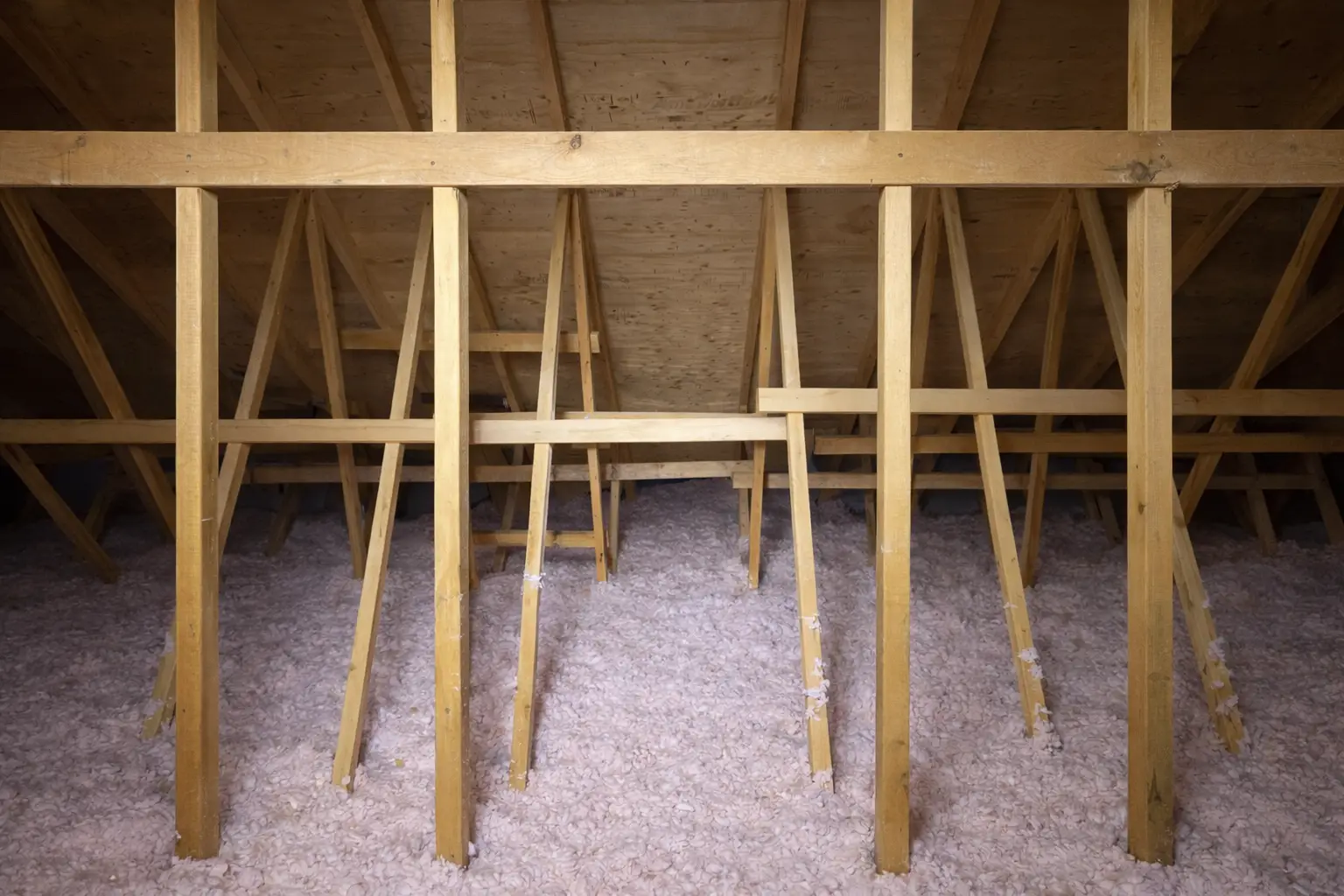
Most homeowners only think about their attic when something goes wrong: a bedroom that never warms up, a heating bill that jumps every January, icicles hanging off the eaves, or scratching noises above the ceiling at night. By the time those signs show up, the problem has usually been building for months or even years.
An attic insulation inspection catches those problems early. It tells you how much insulation you actually have, whether it is still doing its job, and whether anything up there (moisture, pests, poor ventilation, air leaks) is quietly damaging your home. Below, we walk through exactly what we look at during an inspection, the warning signs to watch for, and why checking your attic every so often is one of the cheapest ways to protect your comfort, your roof and your energy bills.
What Is an Attic Insulation Inspection?
An attic insulation inspection is a hands-on assessment of the space between your top-floor ceiling and your roof. An inspector enters the attic, measures the insulation, checks its condition and coverage, and looks at everything that affects how well it performs: ventilation, air sealing, moisture, ductwork, wiring and signs of animals.
The goal is simple: find out whether your attic is keeping heat inside your home in winter and outside in summer, and if not, why not. You come away with a clear picture of what is working, what is not, and what (if anything) needs to be fixed.
What We Check During an Attic Insulation Inspection
Every attic is different, but a thorough inspection covers the same core areas.
1. Insulation Depth and Estimated R-Value
We measure the depth of your insulation in several spots across the attic, not just near the hatch. Depth, combined with the type of insulation, gives an estimate of your current R-value, which is the measure of how well insulation resists heat flow. Many older Ontario homes were built with far less insulation than today’s standards call for, so this number is often the single most important finding.
2. Even Coverage, Gaps and Compression
Insulation only works where it actually is. We look for bare patches, thin spots near the eaves, areas that have been pushed aside by past repairs, and insulation that has been crushed by storage boxes or foot traffic. Compressed insulation loses much of its ability to slow heat loss, and a few uncovered spots can undercut an otherwise well-insulated attic.
3. Type and Condition of the Insulation
We identify what you have: blown-in fibreglass, cellulose, batts, or something older. Loose-fill insulation settles over time, and cellulose in particular can clump or lose loft if it has been exposed to moisture.
We also watch for vermiculite, a pebble-like, grey-brown or silvery-gold insulation found in some older homes. Some vermiculite may contain asbestos. If we suspect it, we will not disturb it, and we will recommend testing by a qualified professional before any work goes ahead.
4. Moisture, Frost and Water Stains
Moisture is the biggest enemy of attic insulation. We check for:
- Water stains on the roof sheathing, rafters or insulation
- Damp or matted insulation
- Frost on nail tips or the underside of the roof deck in winter
- Rusted nails, fasteners or metal ductwork
These usually point to a roof leak, poor ventilation, or warm, humid air escaping from your living space into the attic.
5. Mould and Mildew
Where moisture sits for long enough, mould follows. We look for dark staining or fuzzy growth on the wood framing and roof deck. Catching it early can mean a much smaller, cheaper fix than discovering it after it has spread.
6. Ventilation: Soffits, Baffles and Roof Vents
A healthy attic needs to breathe. Cool, dry outside air should enter at the soffits and exit through roof or ridge vents, carrying moisture with it. We check that soffit vents are not blocked by insulation, that baffles (vent chutes) are in place to keep an air channel open, and that exhaust vents are present and clear. Poor ventilation contributes to condensation, mould and ice dams.
7. Air Leaks From the Living Space
Warm air from your home leaks into the attic through any gap it can find. Common leak points include:
- Around recessed pot lights
- Plumbing stacks and vent pipes
- Electrical wire penetrations
- Chimney and furnace flue chases
- Top plates of interior walls
- The attic hatch itself
Air leaks waste heat and carry moisture into the attic. Sealing them before adding insulation is one of the most effective upgrades you can make.
8. Bathroom Fan and Dryer Ducts
We trace exhaust ducts to make sure they vent all the way outside. A bathroom fan that dumps warm, wet air straight into the attic is a common cause of frost, wet insulation and mould. We also check that ducts are connected, intact and not crushed.
9. Signs of Pests and Wildlife
Raccoons, squirrels, mice, bats and birds all like a warm attic. We look for droppings, nesting material, tunnels through the insulation, chewed wiring and entry points along the roofline and soffits. Animal activity can contaminate and compress insulation, and droppings can create health concerns, so it is important to deal with both the animals and the damaged material.
10. Wiring, Pot Lights and Fire Safety Clearances
We note any visible electrical concerns, such as older knob-and-tube wiring, open junction boxes, or recessed lights that are not rated for contact with insulation. We also check clearances around chimneys and other heat sources. These items need to be addressed properly before insulation is added around them. (Electrical issues should always be assessed and repaired by a licensed electrician.)
11. The Attic Hatch
The hatch is often the weakest spot in the whole ceiling: an uninsulated, unsealed panel sitting on top of a well-insulated attic. We check whether it is insulated and weatherstripped so it is not leaking heat all winter.
Why Regular Attic Inspections Matter
Insulation Doesn’t Stay Perfect Forever
Insulation can perform well for decades, but only if nothing disturbs it. Loose-fill settles. Roof leaks soak it. Animals tunnel through it. Contractors push it aside to run cables or install pot lights and never put it back. An attic that was properly insulated 15 years ago may not be today.
Small Problems Turn Into Expensive Ones
A small roof leak, a disconnected bathroom fan duct or a blocked soffit vent is a minor fix when caught early. Left alone, the same issue can lead to rotted roof sheathing, widespread mould, stained ceilings or damaged drywall. An inspection is far cheaper than the repairs it can help you avoid.
Ice Dams and Roof Damage
In Ontario winters, heat escaping into a poorly insulated or poorly sealed attic warms the roof deck and melts snow from below. That water runs down to the colder eaves, refreezes, and forms an ice dam, which can force water back under your shingles and into your home. Regular inspections help find the heat loss that causes them.
Comfort and Energy Use
Uneven temperatures between floors, drafty upstairs rooms and a furnace that seems to run constantly are often linked to the attic. Because heat rises, a weak attic is one of the main places a home loses heat in winter and gains heat in summer. Knowing the true state of your attic is the first step to fixing it.
Healthier Indoor Air
Mould, animal droppings and deteriorating insulation in the attic are not just attic problems. Air moves between your living space and attic, especially through unsealed gaps. Keeping the attic clean, dry and sealed helps protect the air your family breathes.
Better Decisions When Buying, Selling or Renovating
An up-to-date picture of your attic helps you plan roof replacements, renovations and energy upgrades in the right order, and gives buyers or sellers a clearer sense of a home’s condition.
How Often Should You Have Your Attic Inspected?
There is no legal requirement, but a good rule of thumb is to have your attic looked at:
- Once a year, ideally in the fall before the heating season
- After a major storm or any roof leak
- After roofing, electrical or renovation work that involved the attic
- If you hear or suspect animals in the attic
- Before buying a home or planning an insulation upgrade
If your home is older, has never had its insulation upgraded, or has had moisture problems before, more frequent checks are worth it.
Warning Signs Your Attic Needs Attention Now
Don’t wait for a scheduled check if you notice any of these:
- Upstairs rooms that are noticeably colder in winter or hotter in summer
- Rising heating or cooling bills with no other explanation
- Large icicles or ice buildup along the eaves
- Water stains or peeling paint on top-floor ceilings
- A musty smell upstairs
- Snow melting unevenly on your roof compared with neighbouring homes
- Scratching, scurrying or other sounds overhead
- Visible insulation in your attic that sits at or below the top of the ceiling joists
Can I Inspect My Attic Myself?
You can take a quick look from the hatch with a flashlight, and that is a good habit. But a full inspection is best left to a professional, for a few reasons:
- Safety: Stepping between the joists can send your foot straight through the ceiling below. Attics can also be very hot in summer and have exposed nails.
- Hidden hazards: Vermiculite, mould and animal droppings should not be disturbed without proper protection.
- Accurate measurement: Estimating R-value correctly depends on identifying the insulation type and measuring depth across the whole attic, not just near the hatch.
If you do look yourself, stay on the framing or a board laid across the joists, wear a good dust mask and gloves, and don’t touch anything you can’t identify.
How an Inspection Connects to Your Attic Insulation Rebate
If your inspection shows that your attic is under-insulated, the good news is you may not have to cover the full cost of fixing it. Ontario homeowners may be eligible for rebates through the Home Renovation Savings Program, including up to $1,250 for a standalone attic insulation upgrade with no energy assessment required, and up to $7,700 when insulation is bundled with other upgrades and an assessment is completed.
An inspection also gives you a clear record of your starting point. Knowing how much insulation you have today helps you understand which upgrade path makes sense for your home and what level of rebate you may qualify for.
Learn more in our guides to getting up to $7,700 back on insulation and the latest rebate deadline update.
Frequently Asked Questions
How long does an attic insulation inspection take?
Most inspections take under an hour for a typical detached home, although larger homes, tight attics or homes with multiple attic spaces can take longer.
What R-value should my attic have?
It depends on your home and climate zone, but many older Ontario homes fall well below current recommendations. Ontario’s building code calls for around R-60 in attics for new homes, which gives a useful benchmark. Your inspector can tell you how your attic compares.
Is it bad if my insulation is below the top of the ceiling joists?
Usually, yes. If you can clearly see the tops of your joists, your attic is very likely under-insulated by today’s standards and is a good candidate for an upgrade.
Can you add new insulation on top of old insulation?
Often, yes, as long as the existing insulation is dry, free of mould and pests, and not vermiculite. If the old material is wet, contaminated or damaged, it may need professional attic insulation removal first. An inspection tells you which applies to your home.
Does attic insulation need to be replaced?
Not always. Insulation that is dry, undisturbed and deep enough can last for decades. Replacement or removal is usually needed when it has been damaged by water, mould, smoke or animals.
Book Your Attic Insulation Inspection
Your attic is out of sight, but it has a big effect on your comfort, your energy bills and the health of your roof. A professional inspection tells you exactly where you stand and what to do next. If an upgrade is needed, our team provides attic insulation services across the GTA, and we can help you find out how much you could get back through available rebates.